The Swarm Gathers: Multiverse West 2024 in San Francisco
Blink and you'll miss the singularity.
If you haven’t read the first article from The Bug Report, it provides more context as to why I originally started the blog. It’s not required reading, but it is a great place to start!
Seeing as this is my first out-of-character post, I believe some introductions are in order. I’m the writer/editor/CHO (Chief Human Officer) of the Bug Report. If you have taken the time to read my posts about my personal projects and philosophy on software development and security, thank you. I started this blog for a number of reasons, one of which is to document my journey learning to code in the Age of AI. I think that AI is going to radically change how humans interact with each other and the world at large, and that it already has. There is no place that this is more apparent than the singularity itself: San Francisco.
I recently flew halfway across the country to go to the coolest conference you’ve never heard of — Multiverse West. It was organized and attended by the staff and students at The Multiverse School (myself included). For five days, we’ve been making cool shit with AI, showing off our engineering skills, discussing our personal and collective values, and making our home in this wild tech metropolis. Take a look at what me and the weirdos I call my friends have been up to!
July 17th — Landing in SF and the Welcome Dinner
Day one was the soft launch of the conference, as folks were still showing up and getting ready for the festivities of the following days. San Francisco has some of the best public transit available on the American continent, so despite arriving later than expected, I made it just in time to be greeted for the first time in-person by the friends I’ve been taking classes with for the better part of a year. The Research Team had already been in San Francisco for a few weeks with Liz Howard, the CEO and Lead Educator at The Multiverse School, so there was a lot of chatting and catching up. Gene got a job while they were here, and Roan got a contract doing art for a crypto startup, and I’m over-the-moon excited for them. They are both incredibly talented and passionate people and deserve all the things in the world.
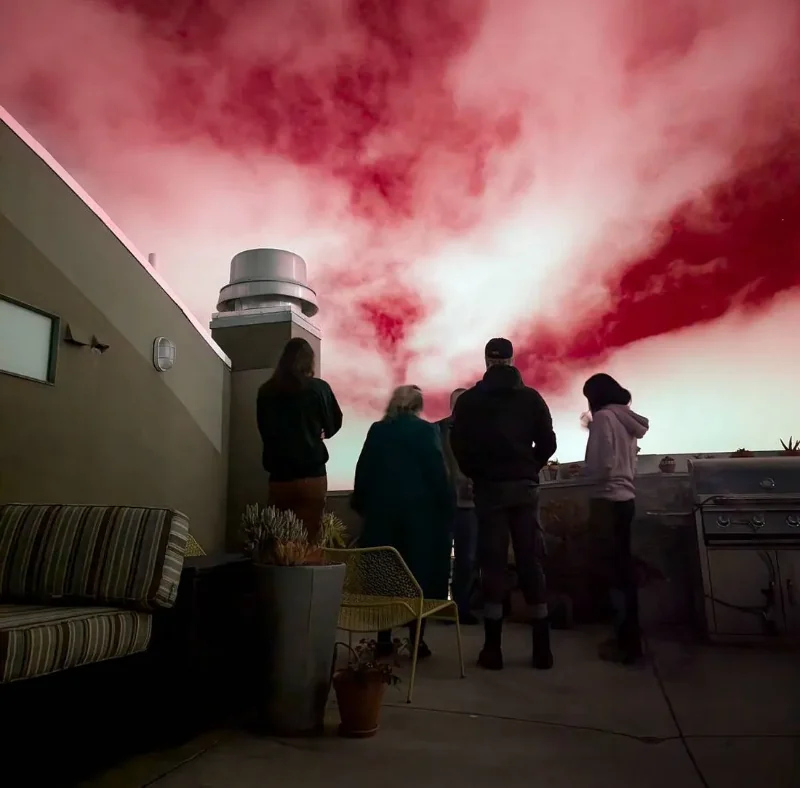
We walked and talked about the city, about our lives, about the safety and security implications of things like blockchain, network protocols, and of course, generative AI. AI was in fact, the overarching theme of the day. We listened to some AI-generated music created by the folks at LessWrong (I Have Been a Good Bing is quickly becoming my favorite album, please give it a listen!) which inspired us to make our own AI music about brain-eating prions. Keep an eye out for the release of the EP, the demos that Roan made are fire. We took the party to the roof for a bit and I felt so incredibly happy to be back in my favorite city in the world.
The time came to retire for the night and get some rest before the conference kicked into full gear. After a full day of travel, I was ready to call it a day and come back the next morning. A trip to SF isn’t complete without riding back to your hotel in a Waymo — a self-driving EV sports car that’s cheaper and safer than taking Lyft or Uber. This was the smoothest ride of my life, and you can see everything the car sees on the dashboard monitor. It has no blind spots, stops for bikes, pedestrians, other vehicles, and can parallel park like no other. It truly seems like the future of rideshares, sad as it is for those who rely on the income they get from driving for these companies. Waymo is both the safer and more environmentally conscious choice.

July 18th — The Un-conference
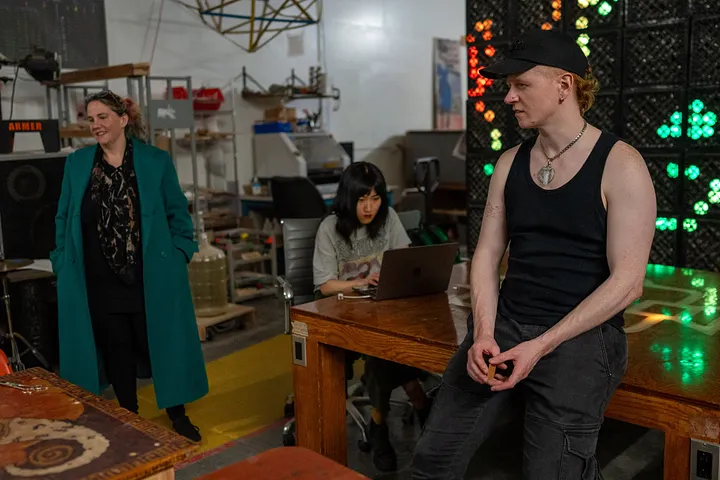
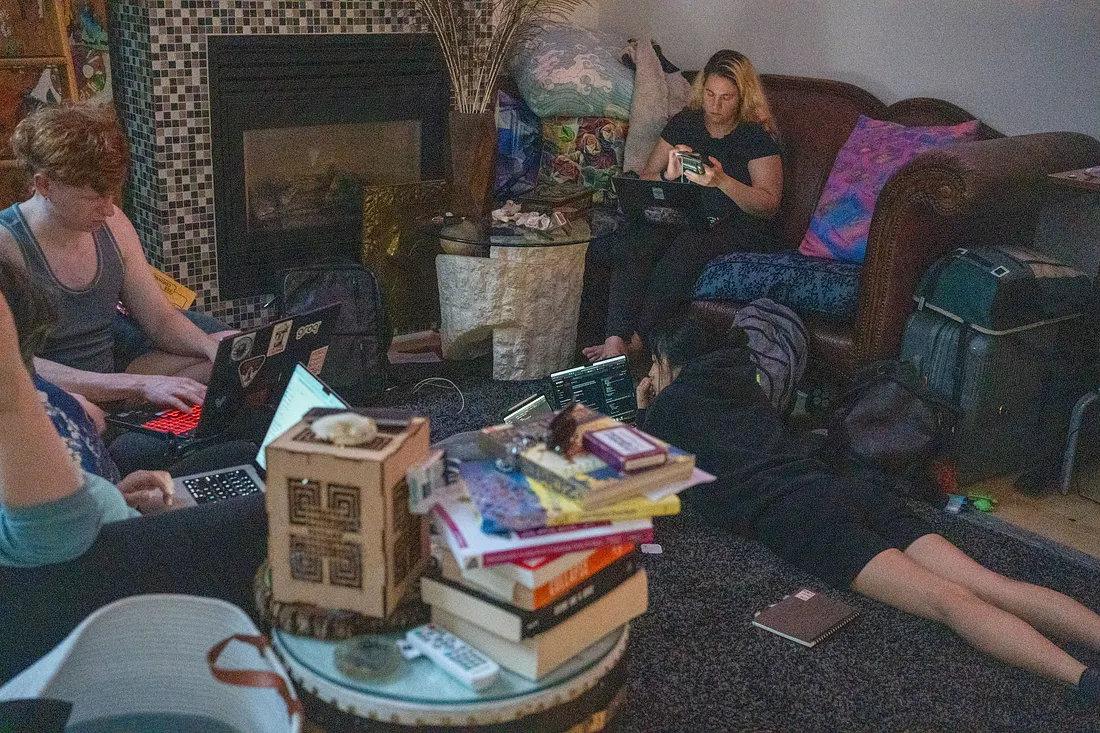
Multiverse West is not your typical conference. There are no speakers, no presentations, no catering, and no formal schedule. The Multiverse is everywhere that we are and everywhere that we aren’t. It is all the things that the Multiverse Travelers find interesting and choose to do with their time, and it just so happens that a bunch of queer technomancers can find a lot of cool things to do in San Francisco. People come and people go, and all students who find themselves in the city are free to stop by on their own time. I spent the first couple of hours working on my web server, while Liz and some students were trying to get Mindcraft to work in Minecraft, and Roan worked on their penetration testing bot.
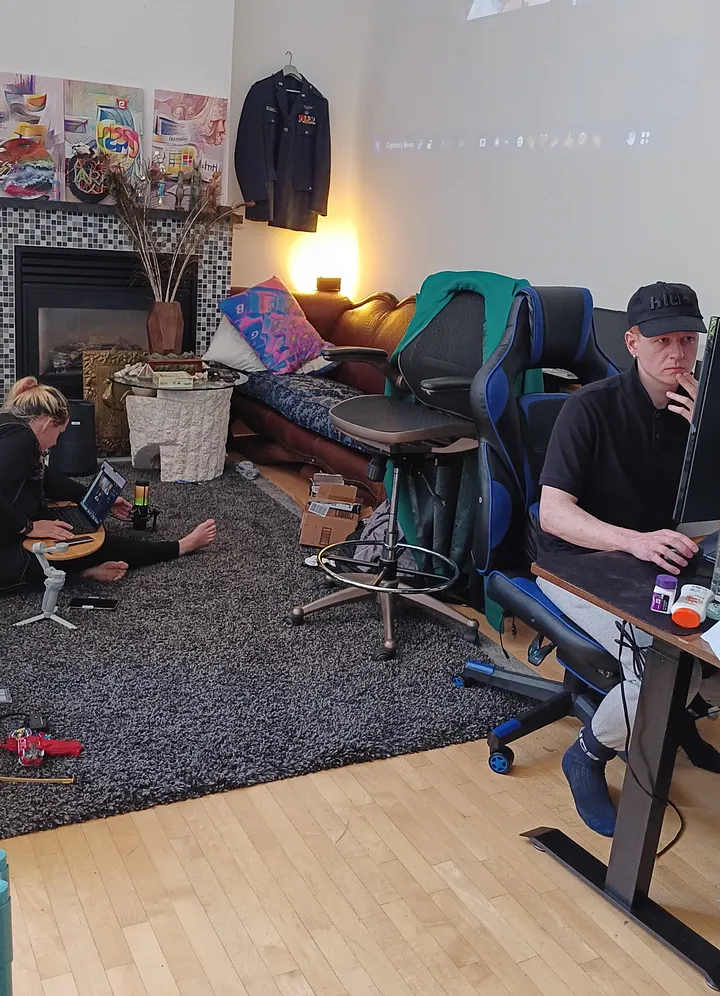
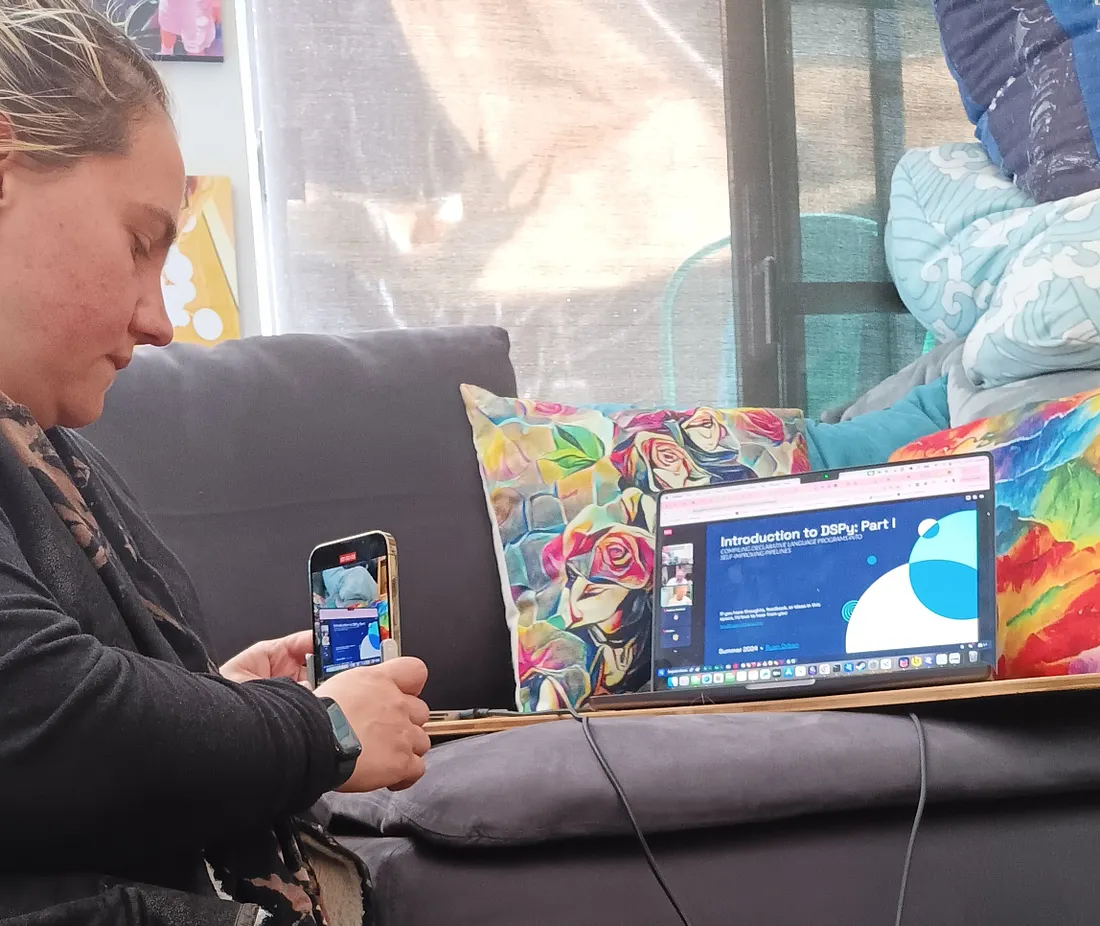
Later in the day, a former coworker of Liz held a workshop on DSPy, a Python framework that evaluates and optimizes LLM prompts to systematically intuit what prompts give rise to better answers. With Generative AI, lots of improvements come from fine-tuning and creating better models, but as is usually the case if you’re not getting what you expect from a model, there is a lot of improvement to be had from a better prompt. Until now, prompt evaluation was based on expert intuition and certain prompting patterns that are known to provide better answers, such as Few-Shot, Many-Shot, Chain of Thought, etc. DSPy works by sampling hundreds-to-thousands of prompts and scoring the responses based on relevant criteria. It’s the missing link to fully automating the fine-tuning process, from reviewing unit tests and logs, to evaluating and curating prompts (DSPy), and then changing the model weights and starting the process again. I look forward to adding English to the list of programming languages in my arsenal with this tool.
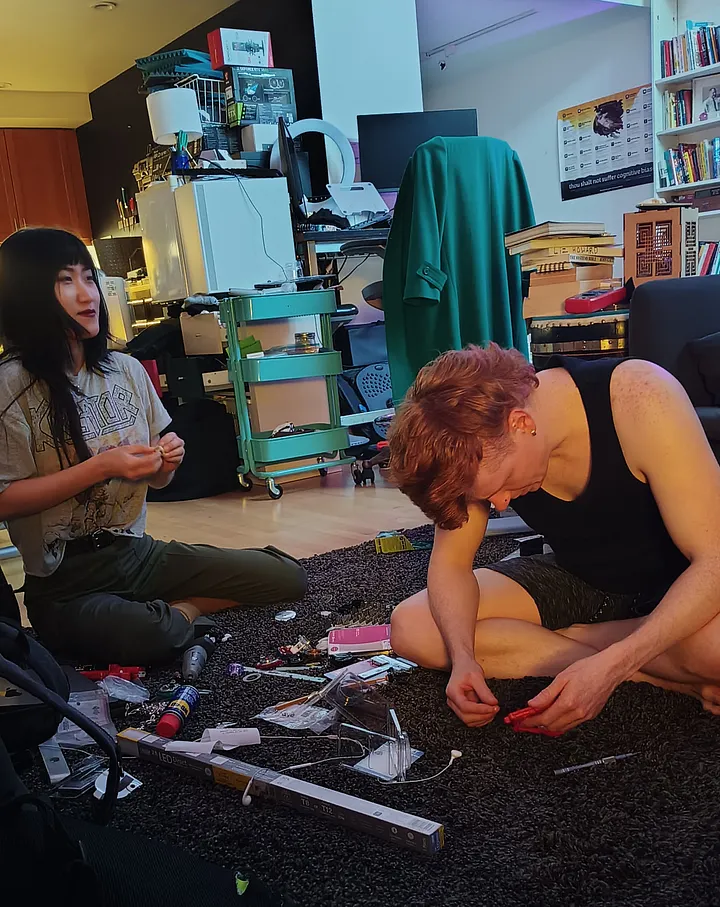
When Gene got home from their new job, we shifted our efforts to helping them add illegal mods to their Beyblade. They were competing the next day in the SF Underground Beyblade League hosted by Noisebridge, where the participants were allowed (and heavily encouraged) to play with hardware modifications that aren’t typically allowed in competitions. We spent the remainder of the night building a Beyblade, which in my opinion is the best possible use of one’s time.
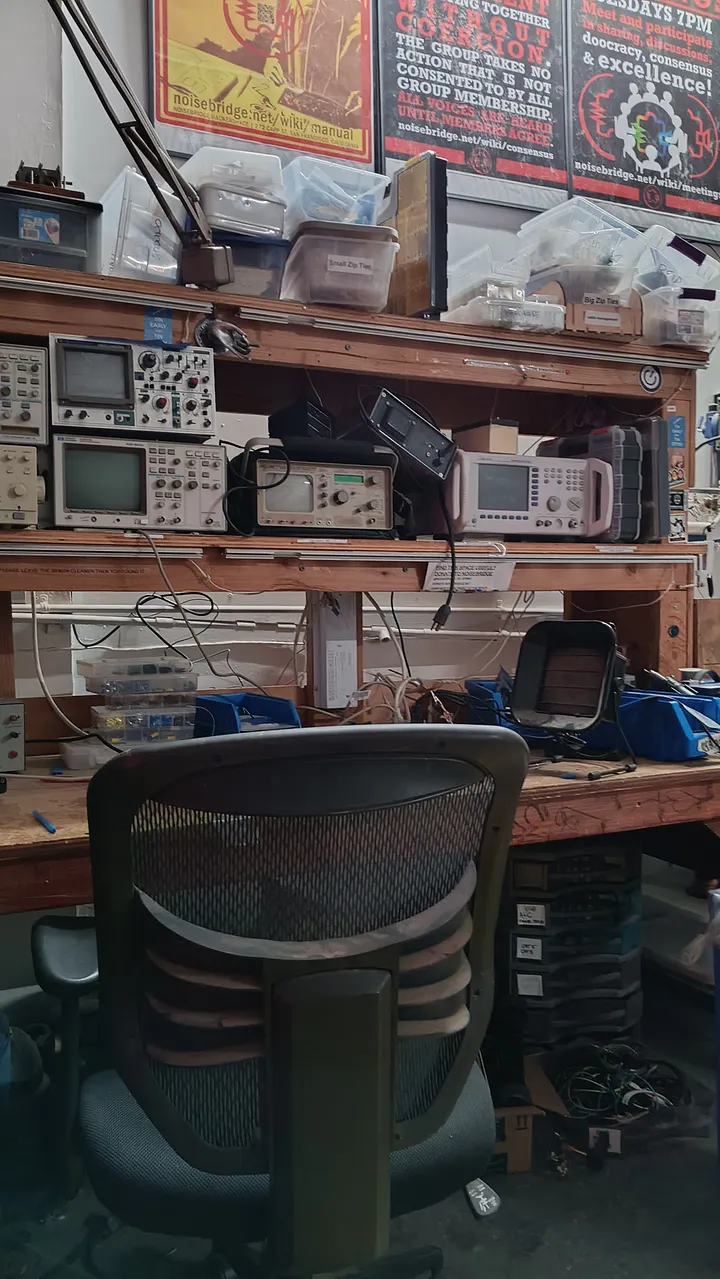
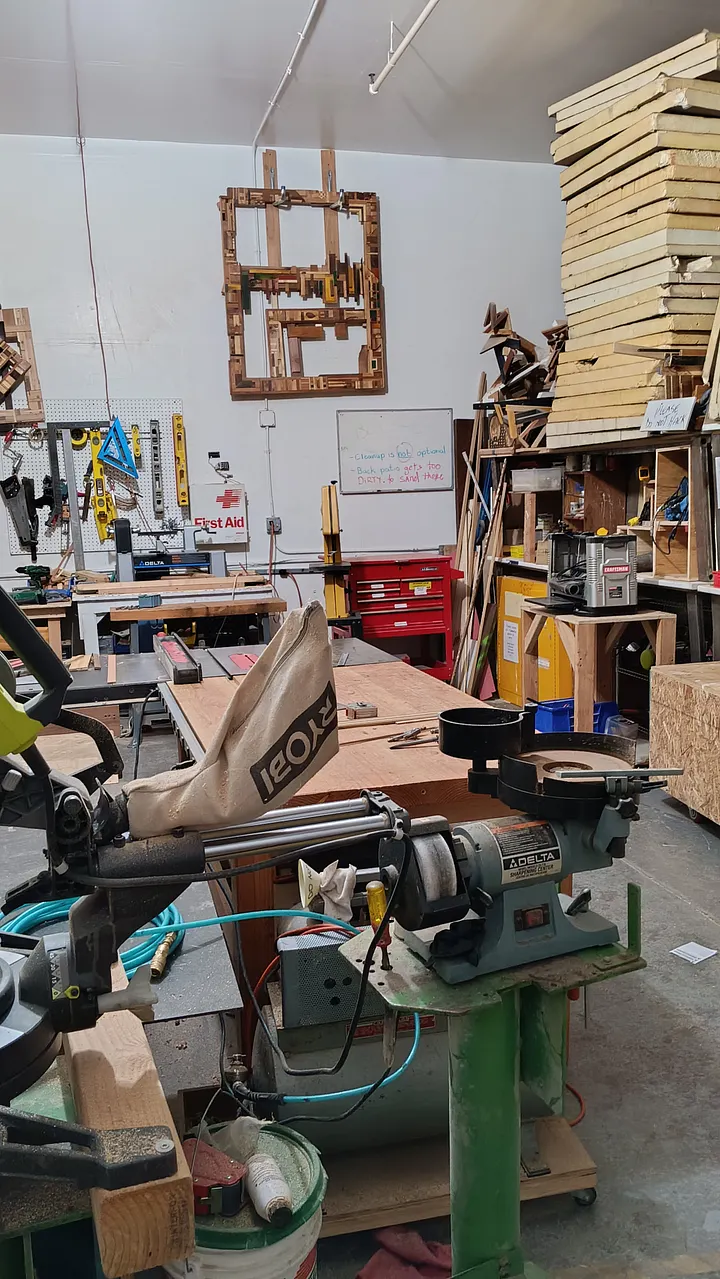
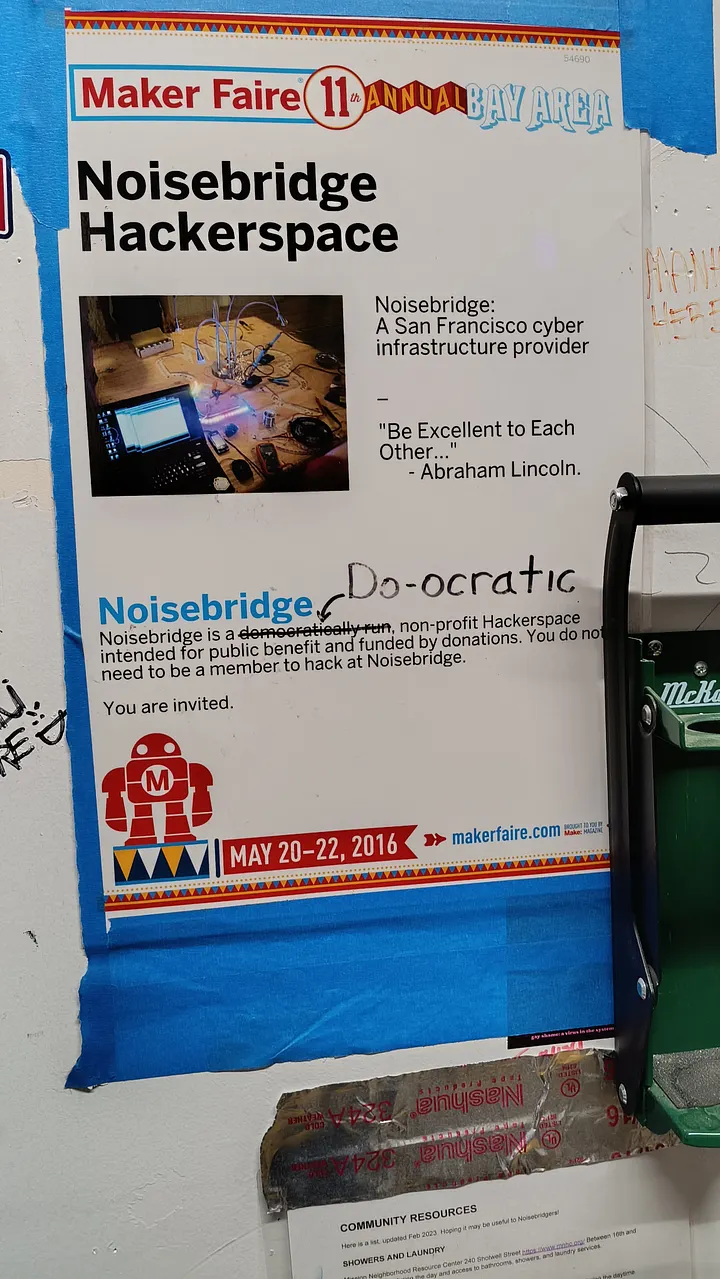
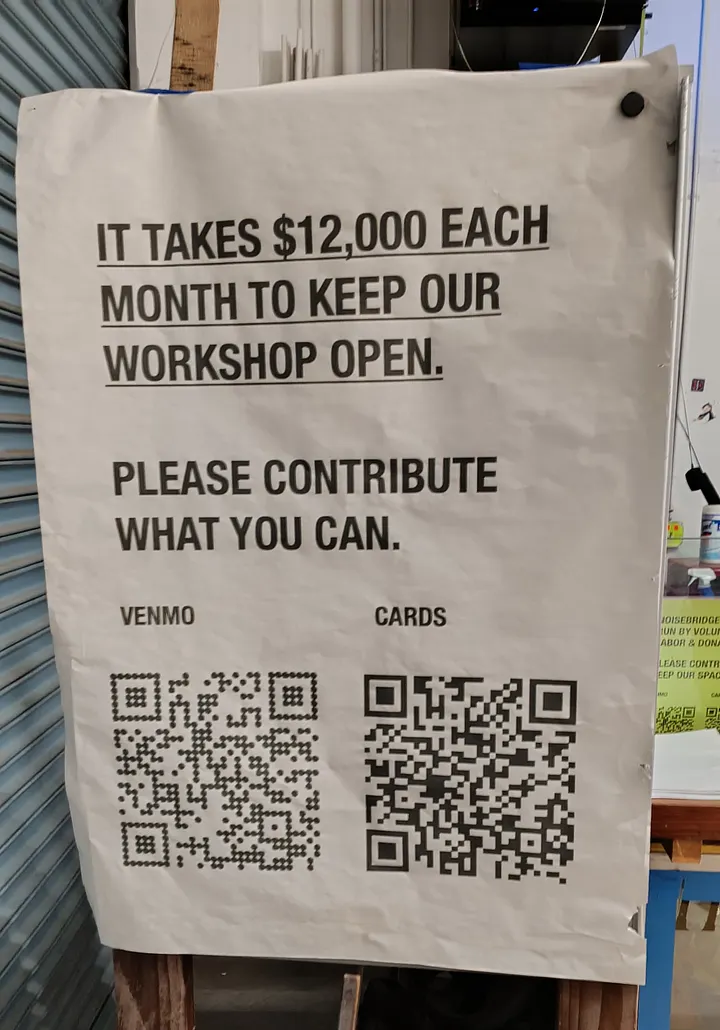
The one thing that we didn’t have that we needed to completely trick out this Beyblade was a 3-D printer, but luckily, San Francisco had us covered. Noisebridge, as well as being the host of the tournament, is one of the first and longest running hackerspaces in the United States. Here you can find equipment for various programming/embedded engineering projects, woodworking, metalworking, 3-D printing, music production, retro console refurbishing, and a whole host of equipment to tinker and make things with. Noisebridge offers classes to learn how to use some of their more complex equipment, and encourages people to try a wide variety of things that they’re interested in.
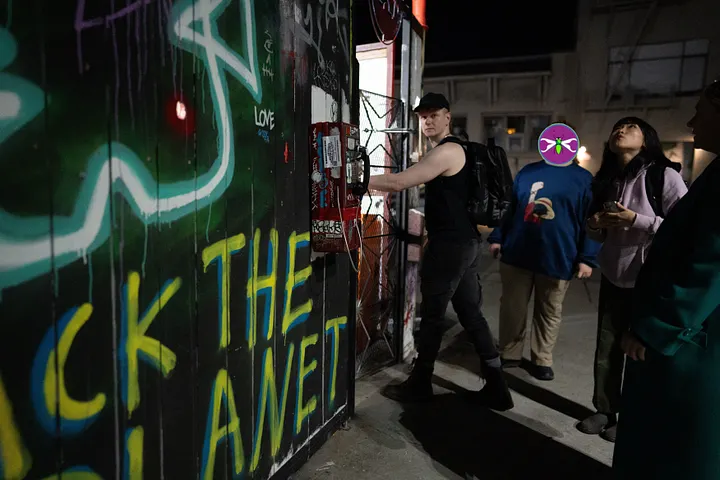
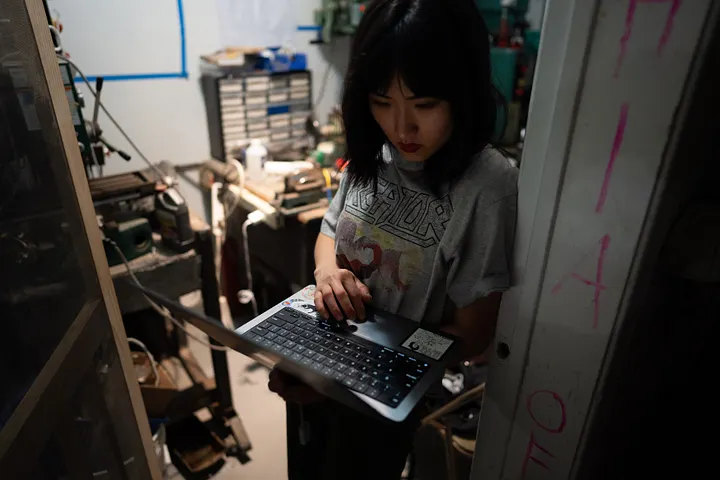
They’ve changed significantly over the years, and they currently operate with a minarchist governing structure and what seems to be three core tenets. As a minarchist space, they see themselves as enforcers of the non-aggression principle, meaning the only thing that is explicitly prohibited is violence or ill-will towards other members of the group. They refer to themselves as a do-ocracy, meaning if you want something done and it doesn’t majorly disrupt the space you can just do it, and if something needs to be done, take it upon yourself to do so. The only other requirement to be in the space is also their mantra/guiding principle: Be excellent to each other.
Noisebridge is excellent when excellent people show up and become actively involved members of the community.
July 19th — Let It Rip
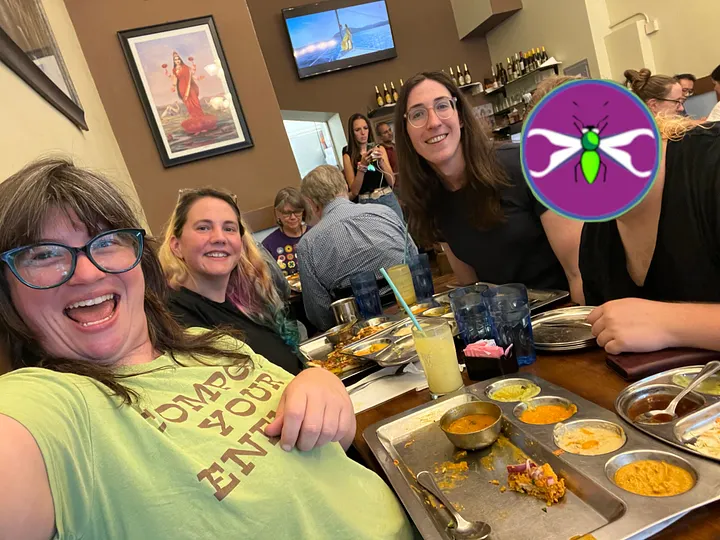
The festivities from the day before tired me out, and I seriously overslept. While Gene and Roan were at Noisebridge putting the finishing touches on their Beyblade and global IT infrastructure was crumbling, I was sound asleep giving my body the rest it desperately needed. I woke up just in time to get Indian food with Liz, Caitlin, and Ash before heading to the Beyblade tournament.
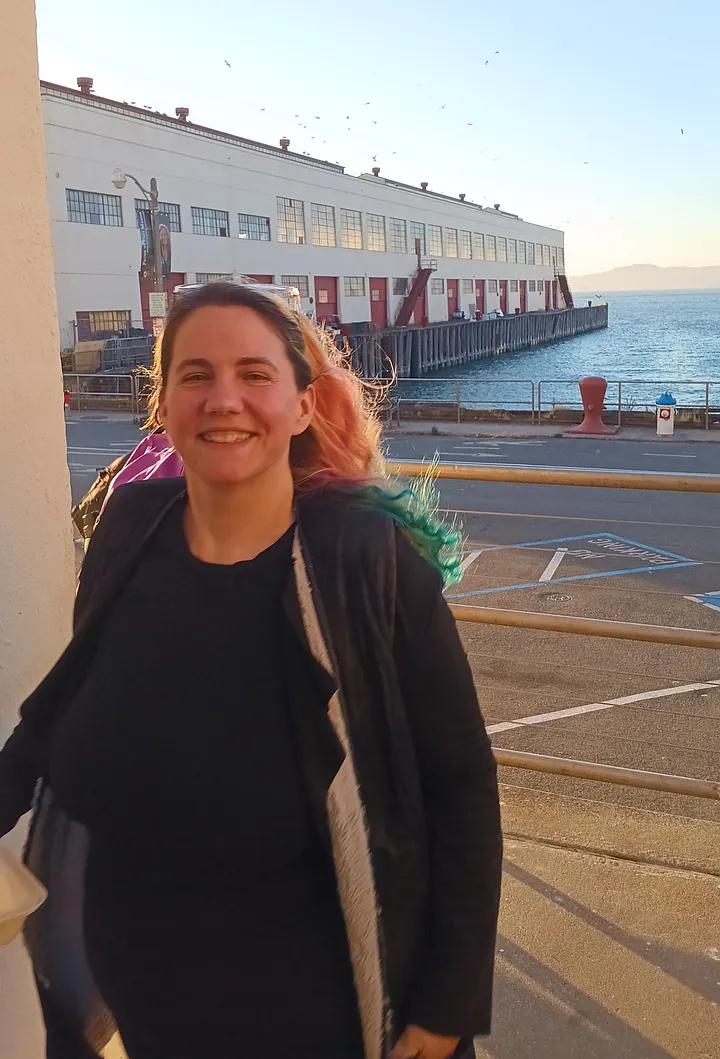
The Beyblade Competition quickly outgrew the space that Noisebridge had available and was moved to Fort Mason, with absolutely gorgeous views of the Bay. We arrived right at golden hour, so you know we had to stop and take pictures.
I can see why the venue change was necessary, because this place was packed. All the attendees were elbow-to-elbow just trying to catch a glimpse of the competitors. Now, I know roughly as much about Beyblade as the next guy, which is to say not that much. What I do know is that in order to win, your blade must be the last one standing. You can lose one of two ways: by losing all your momentum, or by bursting, which is when your Beyblade explodes into its component pieces.
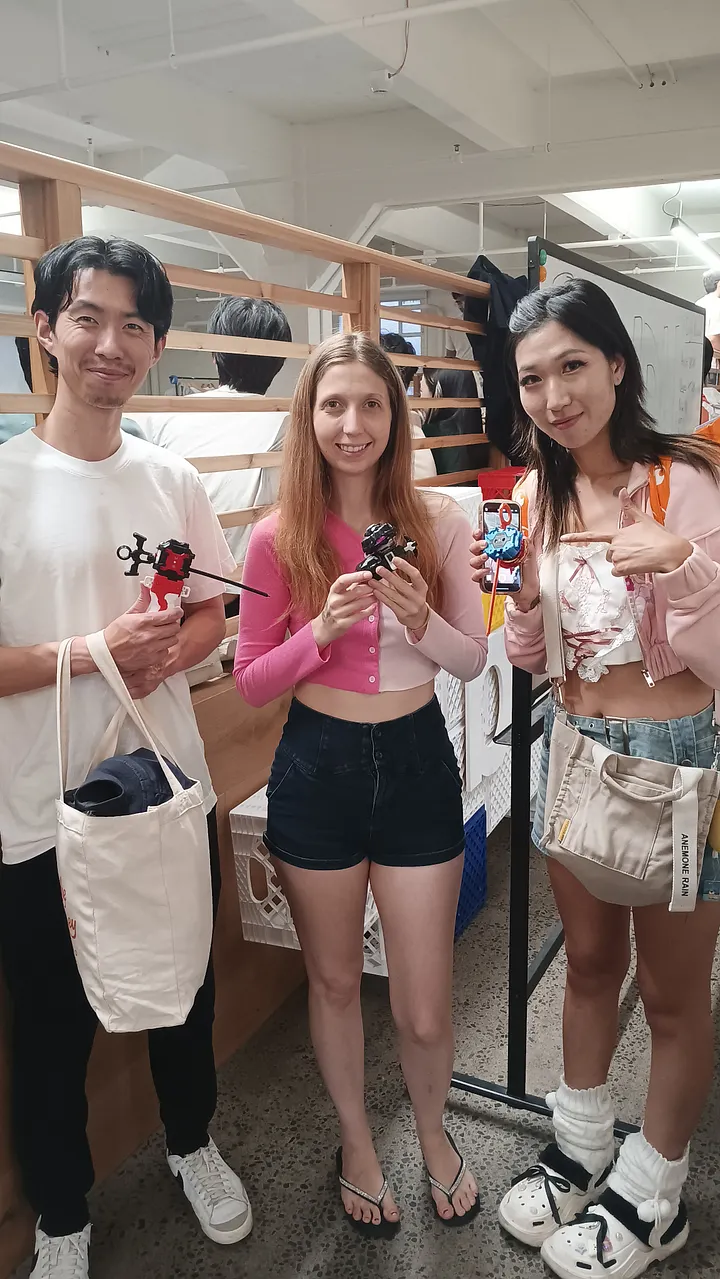
There is an art to competitive Beyblading. A successful launch is harder than you think in such a small stadium, and even experienced bladers were having technical failures. Although, that might just be an unintended side effect of modifying them so heavily without thorough testing. As the tournament progressed, Gene’s time to blade came closer and closer, and they were about to show us what they’re made out of.
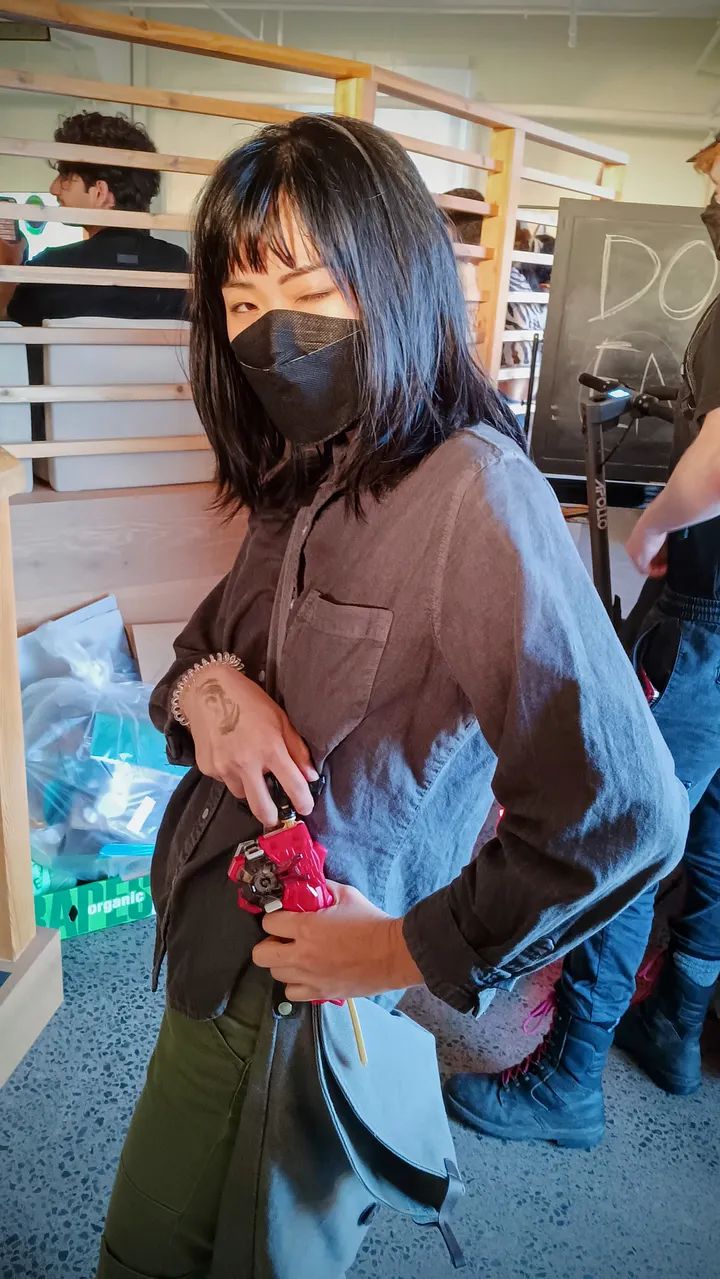
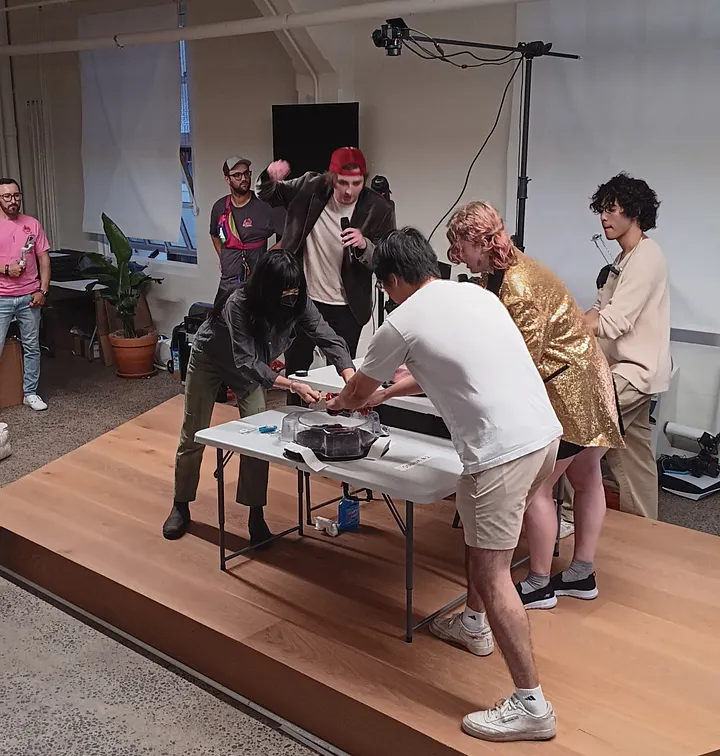
Unfortunately, Gene was no match for the master bladers, and didn’t win the competition. As a wise anime protagonist once said,
“You don’t get stronger by accepting how everyone else does things. You get stronger by finding your own path. That’s how champions are made.” — Free De La Hoya
Don’t take it from me, take it from the best blader in the world. Or, at least, the best blader in Beyblade Burst Evolution. Gene definitely knows what it takes to walk the path of a champion.
The Tenderloin
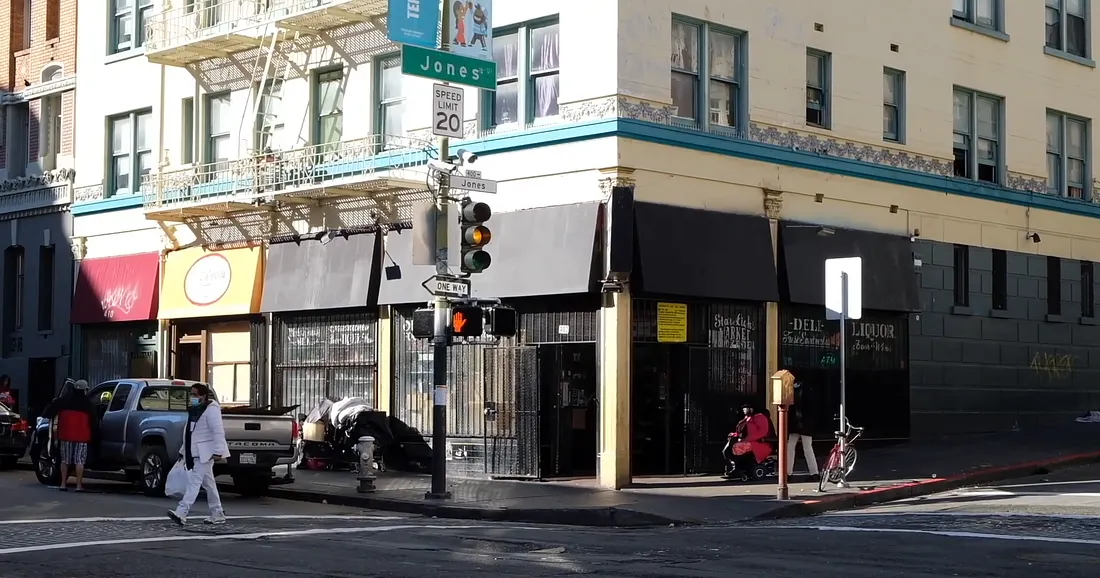
I’ve gone back and forth on whether or not to include a section on the walk home from the tournament, because I’m not sure I can give the Tenderloin the nuanced attention it deserves, despite it being perhaps my favorite part of the city. Most people know it as the sketchy part of downtown, and avoid it due to the prevalence of crime, violence, drug abuse, and homelessness that the city of San Francisco tries desperately to hide. In fact, homelessness is far more rare in the other districts and neighborhoods because the police forcibly uproot people living on the streets elsewhere, leaving the Tenderloin as the only place in the city where they can reasonably be left alone. Walking through the TL, especially at night, is genuinely unsettling, and you can’t help but see the suffering that many of the people living here endure.

Fewer people know the Tenderloin for its storied history. During the Prohibition Era, underground clubs and speakeasies flourished in this area, and it garnered a reputation as a place to satisfy all of one’s illicit vices. The Roaring 20s saw the Tenderloin grow as a bustling entertainment district with a vibrant nightlife, which set the tone for the neighborhood for decades to come.
The Tenderloin’s significance grew further in the 1960s and 70s as a sanctuary for the LGBTQ+ community. Many people view the Castro District as San Francisco’s “gayborhood”, but the TL was the first to hold this title. It was here, in August 1966, that the Compton’s Cafeteria Riot took place — one of the first recorded LGBTQ+ riots in United States history. Transgender individuals and drag queens, tired of police harassment, stood their ground in a fierce confrontation that predates the Stonewall Riots by three years. This event marked the beginning of the Tenderloin’s transformation into what is now known as the Transgender District, the first legally recognized transgender district in the world. It continues to be a place of pride and activism for the transgender community.
The neighborhood has also been a haven for various refugee communities over the decades. Following World War II, a wave of Southeast Asian refugees, including many from Vietnam, Laos, and Cambodia, settled in the Tenderloin. The 1980s and 90s saw an influx of Central American refugees fleeing civil wars and political unrest. These communities brought with them rich cultural traditions, adding to the diverse and vibrant tapestry that makes up the people of the Tenderloin.
While the challenges it faces today are undeniable, the Tenderloin has always been a home for the downtrodden and resilient folks that sought safety and acceptance where they couldn’t find it elsewhere. It is a place of triumph just as much as it is a place of hardship. The wonders of technological advancement that have come out of this city are mesmerizing, but as long as the city tries to hide where it fails its people and instead only shows the innovation, its reputation as a progressive place of love and liberation will continue to be diminished.
And just like that, we were back at Liz’s studio having wonderful discussions about our personal values. Some hot button issues include:
- What does it mean to be queer? (consensus was not reached, it’s different from person to person)
- Why did we used to “perform” being straight and cisgender? (social conditioning and ideology)
- When is being a furry an identity and when is it a fetish (consensus was not reached, also fetishes aren’t inherently bad)
- Why were we not running local LLMs in Minecraft to build stuff with AI like the other students were doing (we don’t know)
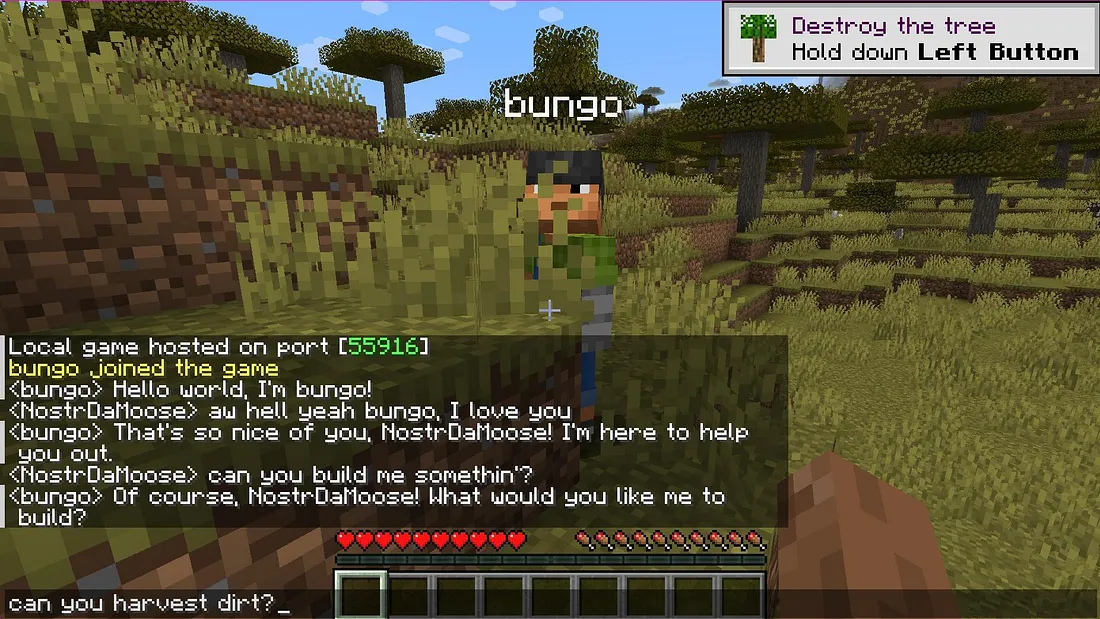
Alas, we did not have time to play around with Mindcraft even though we wanted to with all our heart and soul, because the next day we had a Hackathon to win.
July 20th — AI Agents 2.0 Hackathon
What better way to culminate a group of hackers and AI researchers that are meeting for the first time in person than participating in an AI Hackathon together? The event was hosted at Cloudflare by MultiOn (Now "The AGI Company") and AgentOps, both recently formed AI startups aiming to bring better utility and testability to existing agents. MultiOn has created an API in which agents can interact with webpages on your behalf to do things like book vacations, make restaurant reservations, schedule meetings, etc. AgentOps aims to create observability solutions for tracking AI performance and how agents reason through tasks, so companies are able to refine their prompts and model weights with confidence that they can get provably better responses.
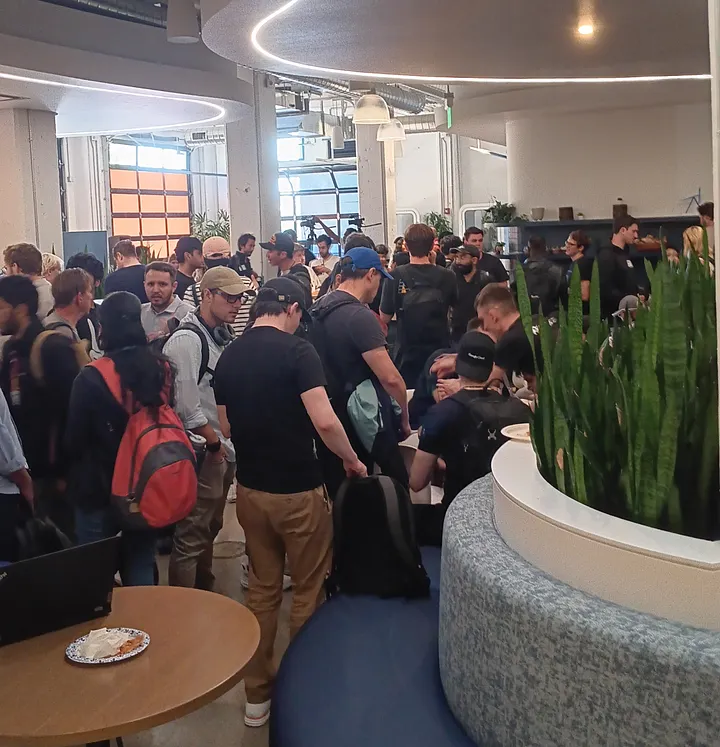
The goal of this Hackathon was to use MultiOn’s API to come up with novel use cases for the technology, including the use of software solutions from MultiOn and AgentOps partners, like Groq, AWS, Wordware, and Anon. We were competing with around 70 teams of people each approaching this competition from a different lens. As soon as the Hackathon officially started, we went straight to work.
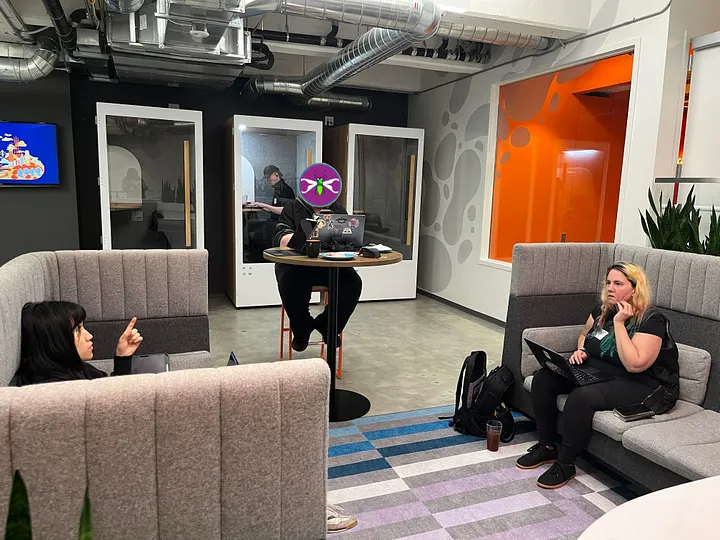
We decided to build an agent that does automated QA testing for user workflows at tech startups. The idea is that developers with small or nonexistent quality assurance teams, when they are further into development, spend less time testing common user workflows, such as navigating to the checkout page and purchasing their product. This may have worked when it was first written, but as a project grows in complexity many things are likely to break, and the team might not catch it until a customer reports the issue.
Before generative AI had the functionality that it does now, this was a difficult task for agents to complete, and there were many points of failure that made something like this a nightmare to develop and debug. Now, the utility we can get by creating some simple tooling and writing a good prompt makes this well within the scope of a small team, even for solo developers.
As the hackathon progressed and Cloudflare closed for the day, we went back to HQ for a break before we continued on the project.
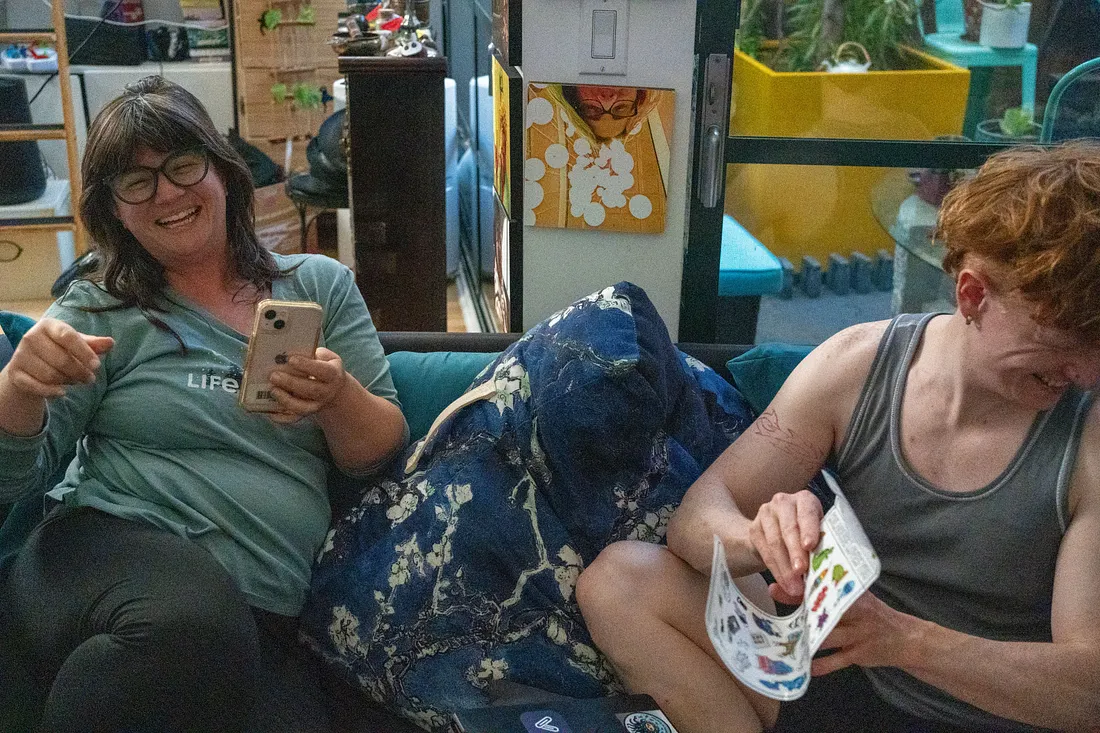
Gene took on the responsibility of learning the MultiOn API and integrating it with the neon.tech Postgres database and Groq agent set up by Roan. Caitlin managed a kanban to track our progress on the project, as well as designed our landing page and created our user stories. I wrote a simple web server in Python Flask (much easier than C you have no idea) to host our landing page, and I set up an emailer bot to send you an email whenever the AI failed to complete a task and needed human intervention. When the agent failed a job, we also added the correct solution to the agent’s memory so that it could perform the task correctly the next time.
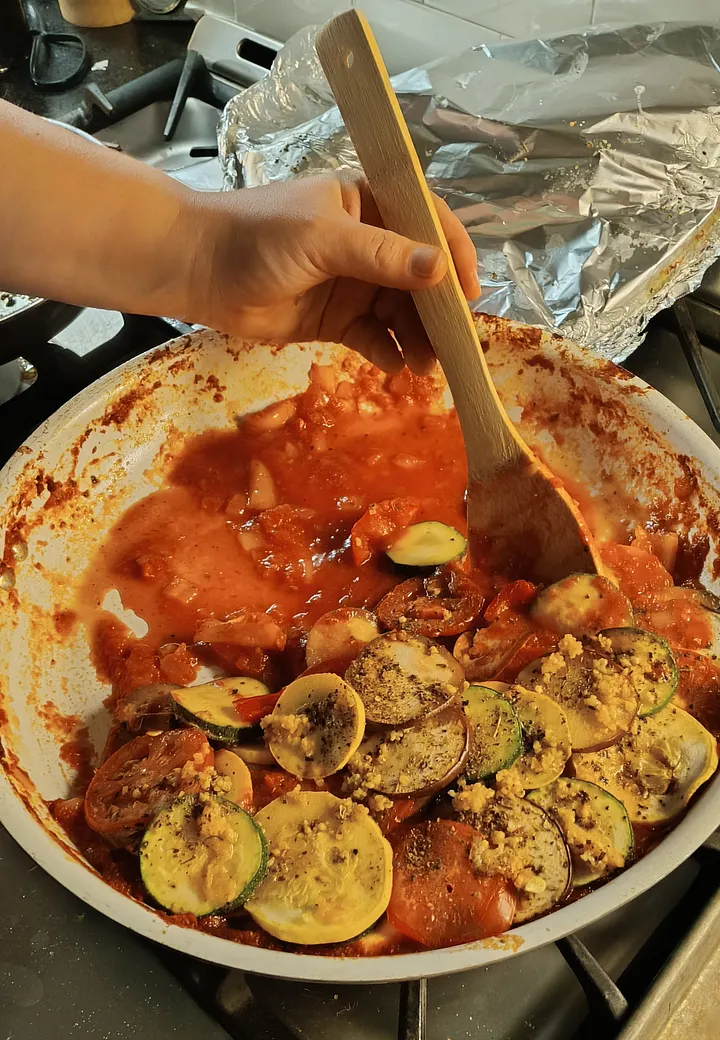
I had a simpler job than the other folks, so I had some time to make dinner for the Multiverse crew. This small group of people is rife with food restrictions — vegan, gluten-free, and corn-free — so I whipped out my best recipe that fit all the constraints, ratatouille! It’s essentially all vegetables, and could turn any picky eater into a veggie lover in an instant.
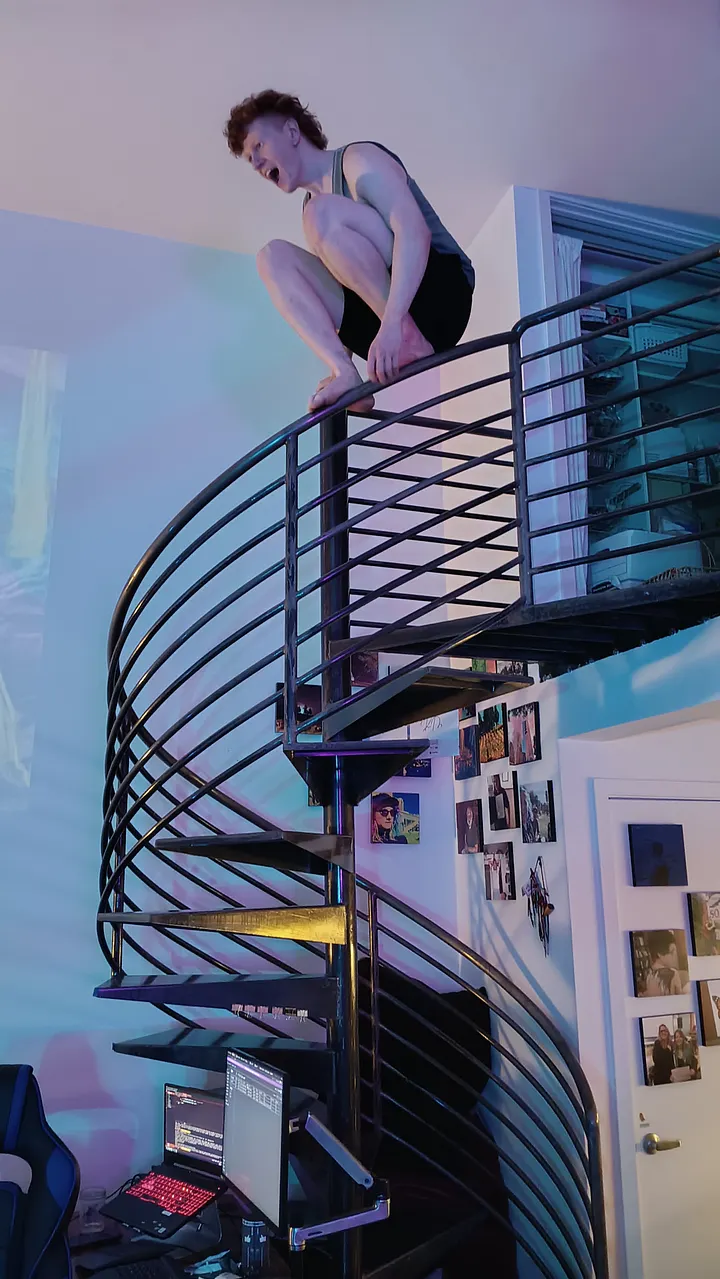
As night fell upon us, we all became a bit delirious. It had been a long day, and the theme of the night was pent-up energy. How did we release this energy, you ask? We swung around some exercise maces, played a bit of Pistol Whip, and did this:
At a certain point we were too tired to continue using our brains, and knew that we would all be more productive in the morning. The next day we had to put the finishing touches on our project and present at the Hackathon, so we needed all the rest.
July 21st — Presentation Day and Multiverse West Finale
The morning was spent working out some of the kinks with our product and recording a demo of our QA bot navigating to The Multiverse School’s stripe page to pay for a membership. We had some last minute issues where the dialogue with the MultiOn agent was being written incorrectly to the database, but we were able to solve it before submissions were due! Here’s Roan working diligently to save the project:
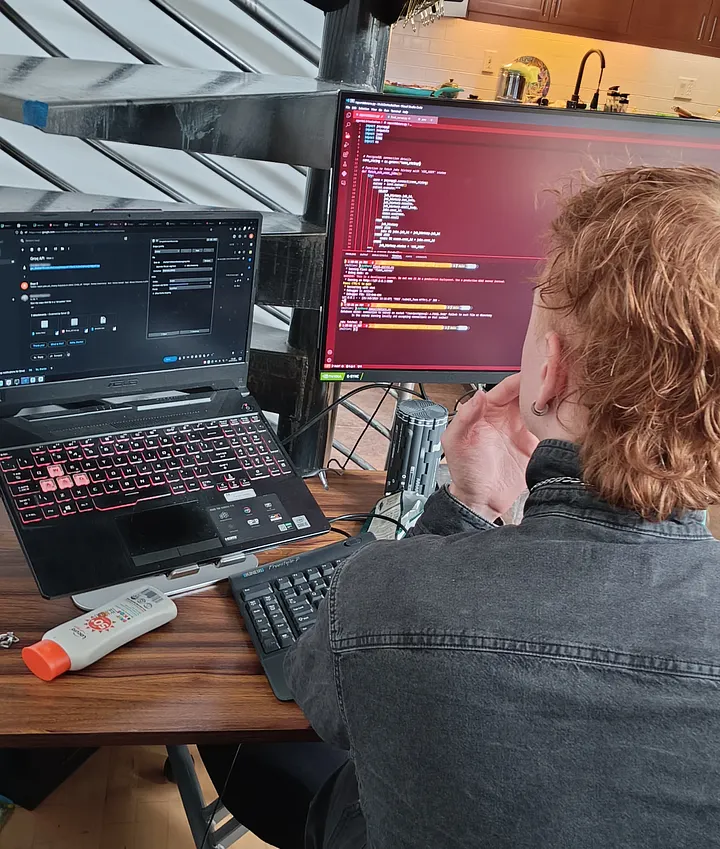
We arrived just as presentations were about to start. A lot of smart people made some really cool projects. A few notable examples:
- Trez AI — Using an Actor-Critic model to improve the responses given by the MultiOn AI
- Custodia AI — An agent that sits on the phone with customer service so you don’t have to
- Catch Up — Aggregator for cutting-edge research papers for enterprise teams
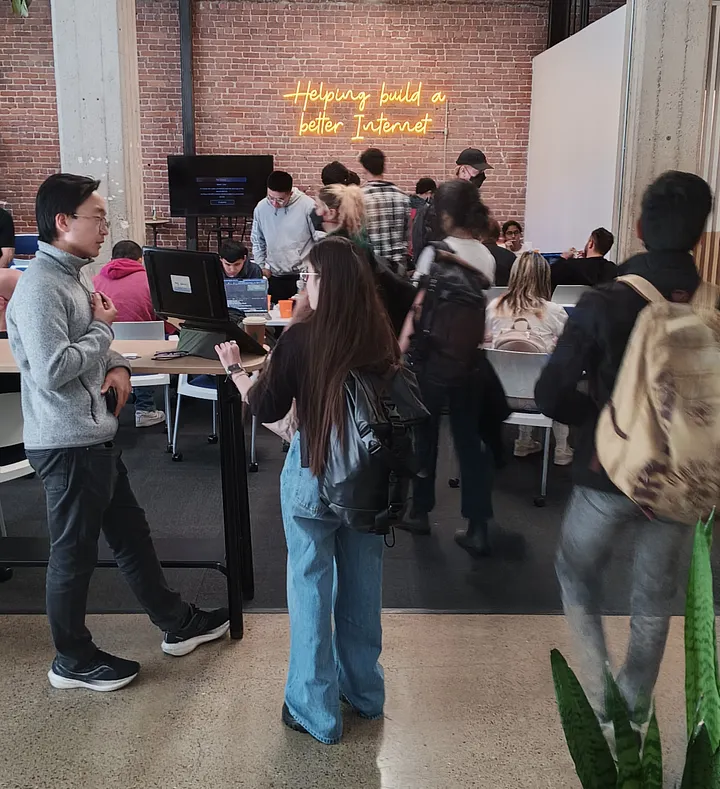
Our presentation actually went incredibly well! We were one of the last to present, and there was about an hour in between the last presenter and the announcement of the semi-finalists where we had some time to refine our product just a little more. After some time, all the teams reported to the Cloudflare lobby for semi-finalist announcements.
Drum roll please… *Ba-dum ba-dum ba-dum ba-dum ba-dum ba-dum tsss*
The Multiverse School was in the top 12!!!
Our team members have spent the last 6–12 months on the cutting edge of research with generative AI, and it shows. Shout out to Liz for putting their heart and soul into teaching and refining their craft, and always encouraging us to push further when we’re stuck. I couldn’t imagine doing this without such an incredible mentor and such smart and talented friends.
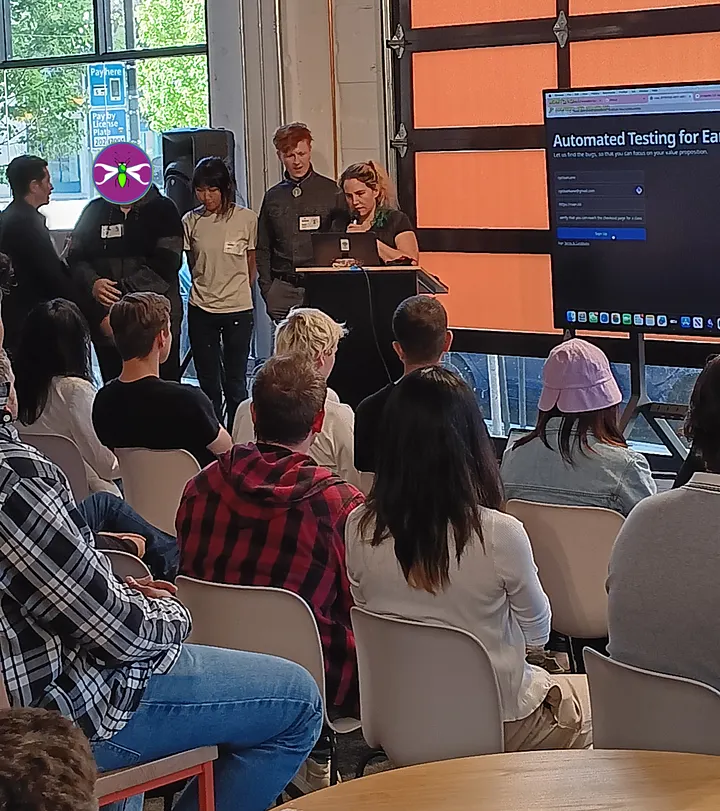
We waited diligently for them to announce the winners of each category. Best use of MultiOn, AWS, Groq, AgentOps, etc. As they neared closer to announcing the top two teams, we were at the edge of our seats and running out of nails to bite.
Congratulations to Trez AI (2nd place) and Custodia AI (1st place)! Y’all deserve it.
Despite not winning any awards, I left here feeling proud of what I accomplished, and I’m so glad that I got to experience this with some of the most amazing people I’ve ever met.
The Past Ends, the Future Begins
With that, we conclude Multiverse West! A lot more happened before I arrived, and Multiverse East is happening right now in Miami. I hope this little glimpse of what goes on at The Multiverse School has inspired you to take the world head on and forge your own path forward. We teach classes on Prompt Engineering and using AI agents, as well as other fun things that are available only if you sign up for the Multiverse Traveler’s program. Check out some of the classes here and sign up for the Prompt Engineering track if you’re interested! Liz also has a TikTok with loads of information about cybersecurity, AI, and The Multiverse School. You can take a look at our Substack where I interview Multiverse students and write about it, and check out the old Multiverse Newsletter if you want to know what we’re up to, or if you want to hire one of our wonderful engineers!
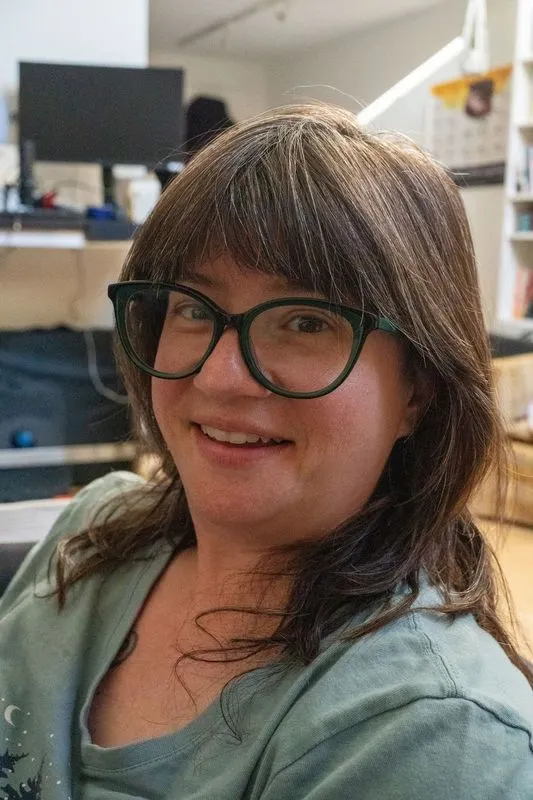
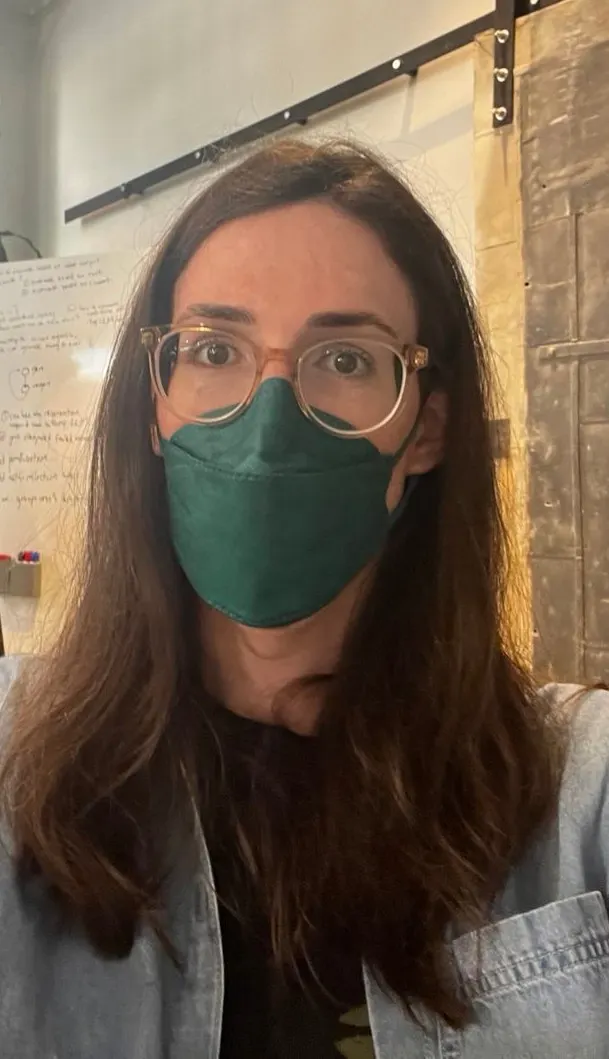
Big thanks to these folks for providing pictures of the event. Y’all rock and the blog post is 10x better quality because of y’all.
Thanks for taking the time to read about Multiverse West, and all the wonderful people who made it what it is! See you all in the future ☸.